
In today’s competitive business environment, companies must control costs without sacrificing quality. For many U.S. businesses, bookkeeping is essential but time-consuming and expensive to manage in-house.
That’s why many owners are turning to offshore bookkeepers. According to Datamatics, offshore bookkeeping can reduce labor costs by 50–70% and improve efficiency when done right, but poor hiring can lead to costly financial errors.
In this comprehensive guide, we’ll walk you through step-by-step how to hire an offshore bookkeeper without making costly mistakes and how to set the foundation for long-term success. Let’s begin by taking a look at why more and more businesses are hiring offshore bookkeepers to save money and grow their business.
Why More and More Businesses Are Hiring Offshore Bookkeepers

Before diving into the hiring process, it’s important to understand why so many businesses are moving in the direction of offshore bookkeepers 🙋🏻♀️ instead of in-house. The simple reason is that bookkeeping has evolved. Consider these aspects:
- Today’s systems are cloud-based
- Financial data is accessible anywhere
- And collaboration happens in real time
That means physical location matters far less than it did even ten years ago. At the same time, U.S. labor costs continue to rise. A full-time, in-house bookkeeper often costs $55,000–$75,000+ annually, plus benefits, payroll taxes, equipment, and management overhead. For small and mid-sized companies, that’s a major fixed expense.
Offshore bookkeeping offers a powerful alternative, and when structured properly, it provides:
| Lower Operational Costs: Offshore bookkeeping talent—particularly in the Philippines—offers highly skilled professionals at a fraction of that cost. As mentioned earlier, companies typically reduce bookkeeping labor costs by 50–70% compared to hiring domestically. |
| Access to Educated Talent: Countries like the Philippines produce thousands of accounting graduates every year, many trained in international standards and experienced with U.S.-based clients. Not only are they CPA-certified locally, but they are also skilled in U.S. accounting systems, like QuickBooks, Xero, NetSuite, and FreshBooks. |
| Flexible Scalability: You might need part-time support now, but full-time later. Offshore staffing models make it easier to scale up or down based on business needs. |
| Extended Productivity: With time zone differences, offshore teams can process work overnight, allowing U.S. businesses to start each day with updated books. |
Overall, offshore bookkeeping offers cost efficiency, access to talent, and operational flexibility while lowering expenses. But knowing why to outsource is just the beginning, so let’s move on to some crucial factors to consider when hiring an offshore bookkeeper.
How to Hire an Offshore Bookkeeper in 7 Steps👩🏻💻
Hiring an offshore bookkeeper can reduce labor costs significantly, but if done poorly, it can lead to compliance errors, misclassified transactions, payroll mistakes, and serious financial headaches.
Here are 7 steps to successfully hire an offshore bookkeeper without making costly mistakes:
Step 1. Define the Role With Precision

One of the most common and costly mistakes businesses make is hiring too quickly without clearly defining the role. Bookkeeping is not one-size-fits-all. For example, the needs of an eCommerce company are very different from those of a real estate brokerage or a marketing agency.
Before posting a job or contacting candidates, take time to clarify:
- What software do you use? (QuickBooks Online, Xero, NetSuite, etc.)
- How many transactions occur monthly?
- Do you require accounts payable and receivable management?
- Will the bookkeeper handle payroll?
- Is sales tax filing part of the role?
- Are monthly financial reports required?
- Or, does your industry have special compliance requirements?
When responsibilities are vague, expectations become misaligned, which leads to frustration on both sides. Instead, write a detailed role breakdown including daily, weekly, and monthly tasks. This document becomes your hiring roadmap—and later, your onboarding guide.
Once your needs are crystal clear, the next decision is where to hire from.
Step 2. Choose the Right Offshore Market

Offshore bookkeeping talent exists globally, but the Philippines has emerged as one of the most trusted destinations for U.S. companies. This isn’t by accident. The Philippines offers a unique combination of factors that support long-term business relationships, such as:
| Strong English Proficiency: English is widely spoken and used in business, reducing communication barriers. |
| Cultural Compatibility: Filipino professionals are highly familiar with Western business practices, customer service standards, and corporate expectations. |
| Accounting Education: The country produces a steady pipeline of accounting graduates, many of whom work with international clients early in their careers. |
| Long-Term Commitment: When placed in stable, structured roles, Filipino professionals often remain with companies for years, not months. For example, FullStaff has an average retention of five years. |
Choosing the right country improves your odds of success. But location alone doesn’t determine outcomes. The hiring structure matters just as much, so let’s take a closer look at whether to hire freelancers vs. dedicated offshore staff.
Step 3. Freelancers vs. Dedicated Offshore Staff
At this stage, businesses often face a critical decision: hire a freelance bookkeeper or invest in a dedicated offshore employee. Let’s explore both options in more detail.
Freelance Bookkeepers

Freelancers can be attractive because they appear inexpensive and easy to hire. Platforms offer instant access to candidates, and contracts can be flexible. However, there are some risks to consider:
- Many freelancers juggle multiple clients
- Availability can fluctuate
- Accountability may be limited
- Turnover can be frequent
- And data security may lack structure
Freelancers may work well for small, low-volume bookkeeping tasks. But as financial complexity grows, consistency becomes essential.
Dedicated Offshore Bookkeepers

A dedicated offshore bookkeeper works exclusively for your business. They become part of your team, understand your systems, and focus entirely on your operations. Here are the key benefits of hiring a dedicated offshore bookkeeper:
- 100% focus on your business
- Greater accuracy through repetition and familiarity
- Long-term retention (an average of five years)
- Stronger accountability
- Better data security control
While the upfront cost may be slightly higher than hiring a freelancer, the long-term value is significantly greater. After selecting your hiring model, the next priority is evaluating candidates properly.
Step 4. Screen for Competence, Not Just Cost

Choosing the cheapest option is often the most expensive mistake. Instead of focusing solely on hourly rates, evaluate the depth of expertise and problem-solving ability. Here’s what to assess:
| Technical Expertise: Ensure candidates are experienced with your accounting software. Certifications in QuickBooks or Xero are strong indicators. Familiarity with U.S. GAAP is essential. |
| Process Understanding: Try to get an idea of the actual work process to see if it matches your workflow and needs. Ask situational questions: How do you perform month-end reconciliation? How do you identify discrepancies? And what steps do you take before closing the books? Strong bookkeepers think in systems—not just transactions. |
| Attention to Detail: Provide a small practical test to see the candidate’s attention to detail. Accuracy is non-negotiable in financial roles. |
| Communication Skills: Even technically strong candidates must communicate clearly. Look for responsiveness, professionalism, and clarity in written English. |
Once you’ve selected the right person, your focus shifts to onboarding.
Step 5. Create a Structured Onboarding Framework for Clarity

Hiring great talent without structure is like buying advanced software without instructions. Your offshore bookkeeper needs clarity. To create a structured onboarding framework, start by documenting:
- Month-end closing procedures
- Expense categorization standards
- Approval workflows
- Reporting templates
- Payroll schedules
- And file storage systems
The more organized your internal systems are, the smoother the transition will be. Additionally, here are more security and workflow-related factors to consider for an optimal onboarding process:
- Use secure password managers
- Enable multi-factor authentication
- Set role-based access permissions
- Schedule daily check-ins during the first two weeks
- Transition to weekly review meetings
Strong onboarding builds confidence—and confidence improves retention. Speaking of retention, long-term stability is where offshore bookkeeping delivers its greatest ROI, which we’ll discuss next.
Step 6. Focus on Retention and Team Integration to Boost ROI

Hiring is only the beginning—retention is where real ROI happens. High turnover destroys efficiency and can lead to:
- Lost institutional knowledge
- Re-training costs
- Reporting delays
- And costly financial errors
Every time a bookkeeper leaves, knowledge disappears, and re-training consumes time and money. Wondering how to prevent high turnover? Here are some crucial aspects to consider:
| Treat Offshore Staff as Core Team Members: Include your offshore staff in meetings. Also, remember to share company updates and recognize achievements. |
| Provide Clear Expectations: Ambiguity leads to mistakes. Clear performance standards improve confidence. |
| Offer Growth Opportunities: Allow upskilling in advanced accounting functions. When offshore bookkeepers feel valued, retention increases dramatically. |
And this is where partnering with the right staffing company can make all the difference. We also have to consider security and data breaches. Let’s take a look at how to protect your financial data and ensure compliance.
Step 7. Protect Financial Data

Financial data is sensitive. Mistakes here can lead to IRS issues or fraud. Here’s how to protect your business:
- Use Secure Cloud-Based Software: Avoid sharing spreadsheets via email
- Implement Access Controls: Limit access only to necessary systems
- Maintain Audit Trails: Ensure your accounting software tracks changes
- Work With Reputable Staffing Partners: Avoid hiring individuals without verified backgrounds. Work with a reputable staffing firm like FullStaff to avoid costly mistakes
Security is not just about tools—it’s about trust and structure. Before wrapping up, it’s worth highlighting a few common mistakes businesses make when hiring offshore bookkeepers.
6 Costly Mistakes to Avoid❌

While offshore staffing can deliver significant cost savings and efficiency gains, cutting corners during the hiring or onboarding process can quickly create financial and operational problems. Understanding these pitfalls will help ensure your offshore bookkeeping setup strengthens your business rather than complicating it. Here’s a quick summary of what not to do:
1. Hiring Based Solely on Price
Choosing the cheapest candidate may seem like a smart way to save money, but bookkeeping is not an area where you want to compromise on quality. Inaccurate financial records, misclassified transactions, or missed reconciliations can lead to tax issues, reporting errors, and costly corrections later. Instead of focusing only on hourly rates, prioritize experience, reliability, and attention to detail.
2. Failing to Define Role Scope
Many businesses hire a bookkeeper without clearly outlining responsibilities. This can lead to confusion about who handles tasks such as reconciliations, accounts payable, payroll, or financial reporting. Clearly defining the role from the start helps set expectations, prevents overlap, and ensures your bookkeeper can perform their job efficiently.
3. Skipping Skill Assessments
Resumes and interviews alone don’t always reveal how well someone actually performs bookkeeping tasks. Without practical testing, you may end up hiring someone who lacks experience with your accounting software or processes. A simple skills assessment—such as categorizing transactions or reviewing a reconciliation example—can quickly reveal a candidate’s level of expertise.
4. Ignoring Onboarding Structure
Even highly skilled bookkeepers need guidance when joining a new organization. Without documented workflows, reporting templates, or communication routines, new hires may struggle to understand how your financial systems operate. Structured onboarding, clear SOPs, and regular check-ins during the first few weeks can dramatically improve accuracy and productivity.
5. Overlooking Security Protocols
Financial data is one of your company’s most sensitive assets. Sharing login credentials through unsecured channels or granting excessive system access can create security risks. Implementing password managers, role-based access controls, and secure cloud-based systems helps protect your financial information while maintaining efficient collaboration.
6. Treating Offshore Staff as Temporary Labor
One of the biggest missed opportunities is viewing offshore staff as short-term help rather than long-term team members. When offshore professionals are integrated into your company culture, given clear responsibilities, and recognized for their contributions, they are far more likely to stay and grow with your organization. This stability leads to better financial continuity and stronger operational efficiency.
By avoiding these common mistakes, offshore bookkeeping can become a strategic advantage—helping your business reduce costs, improve financial organization, and operate more efficiently without sacrificing quality.
An Offshore Bookkeeper Saves You Money💰
Hiring an offshore bookkeeper can transform your business by lowering costs, improving financial accuracy, and giving leadership more time to focus on growth. When your bookkeeping is consistent, accurate, and professionally managed, your business doesn’t just save money—it gains clarity, confidence, and the momentum needed to scale.
And that’s where real growth begins. But success depends on structure, so you need to prepare by:
- Defining your needs clearly
- Choosing the right hiring model
- Screening thoroughly
- Onboarding strategically
- Protecting your data
- And investing in retention
Or simplify everything by partnering with a trusted offshore staffing provider, like FullStaff.
With FullStaff, you gain access to top-tier Philippine virtual bookkeepers who are fully dedicated to your business—with the stability of a five-year average retention rate. Let’s explore how to simplify and grow your business with the best offshore bookkeepers in the industry.
Hire Offshore Bookkeepers Without the Risk With FullStaff🤝
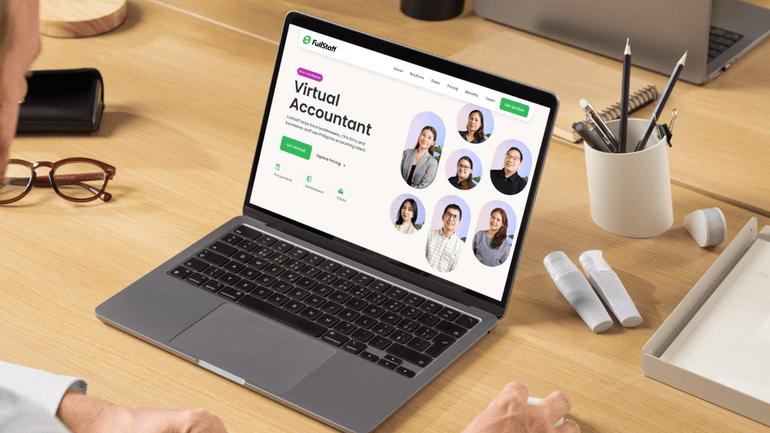
Building offshore teams independently requires recruiting, screening, HR management, payroll compliance, equipment setup, and IT oversight. For many companies, that complexity slows progress, but FullStaff eliminates that friction!
For over a decade, FullStaff has connected U.S. companies with top-tier Philippine virtual bookkeepers through a fully managed, structured staffing model designed for long-term stability.
Why FullStaff?
Not convinced yet? Here’s what sets FullStaff apart:
| 100% Dedicated Bookkeeping Clerks: Unlike freelancers balancing multiple clients, FullStaff bookkeeping professionals are 100% dedicated to your business. They work exclusively for you, learning your systems deeply and becoming a true extension of your team. |
| Access to Top Philippine Talent: FullStaff recruits skilled accounting professionals with strong educational backgrounds and experience supporting U.S. companies. |
| Exceptional Retention: FullStaff’s dedicated bookkeeping clerks have an average retention of five years. That stability means you build institutional knowledge and consistency instead of constantly rehiring and retraining. |
| Fully Managed Infrastructure: Get access to a fully managed infrastructure with FullStaff. We handle: Recruitment and vetting HR and payroll administration ComplianceIT and equipment setup And ongoing support You gain the productivity of offshore talent without the administrative burden. |
Furthermore, we strive to run our business with a balanced focus on people, the planet, profit, and purpose—ensuring that each plays an equally important role in how we operate and grow.
With our professional and seasoned offshore talent, your business can save up to 70% compared to hiring in-house employees.
So what are you waiting for? 👉 Get started with FullStaff today!
We hope this guide helped you learn how to hire an offshore bookkeeper without making costly mistakes. Thank you for reading.